The Enterprise Shift to Agentic 24/7 Workflows
The enterprise conversation around artificial intelligence has quietly moved past simple chatbot assistance. Organizations are no longer looking for tools that just answer questions; they are restructuring operations around systems that can act, reason, and execute tasks autonomously around the clock. This marks the transition from reactive copilot models to proactive, agentic workflows.
And this shift is not just a technological upgrade. It represents a fundamental restructuring of how cognitive labor is deployed, measured, and scaled across global enterprises. Legal departments, traditionally known for high-friction, document-heavy processes, have emerged as the premier testing ground for this always-on paradigm.
Defining the Agentic Economy
Structured Definition: Agentic AI refers to autonomous artificial intelligence systems designed to execute multi-step workflows, make localized decisions, and manage complex tasks with minimal human intervention. Unlike traditional generative AI that requires constant prompting, agentic systems operate continuously, chaining together logic to achieve a predefined enterprise goal.
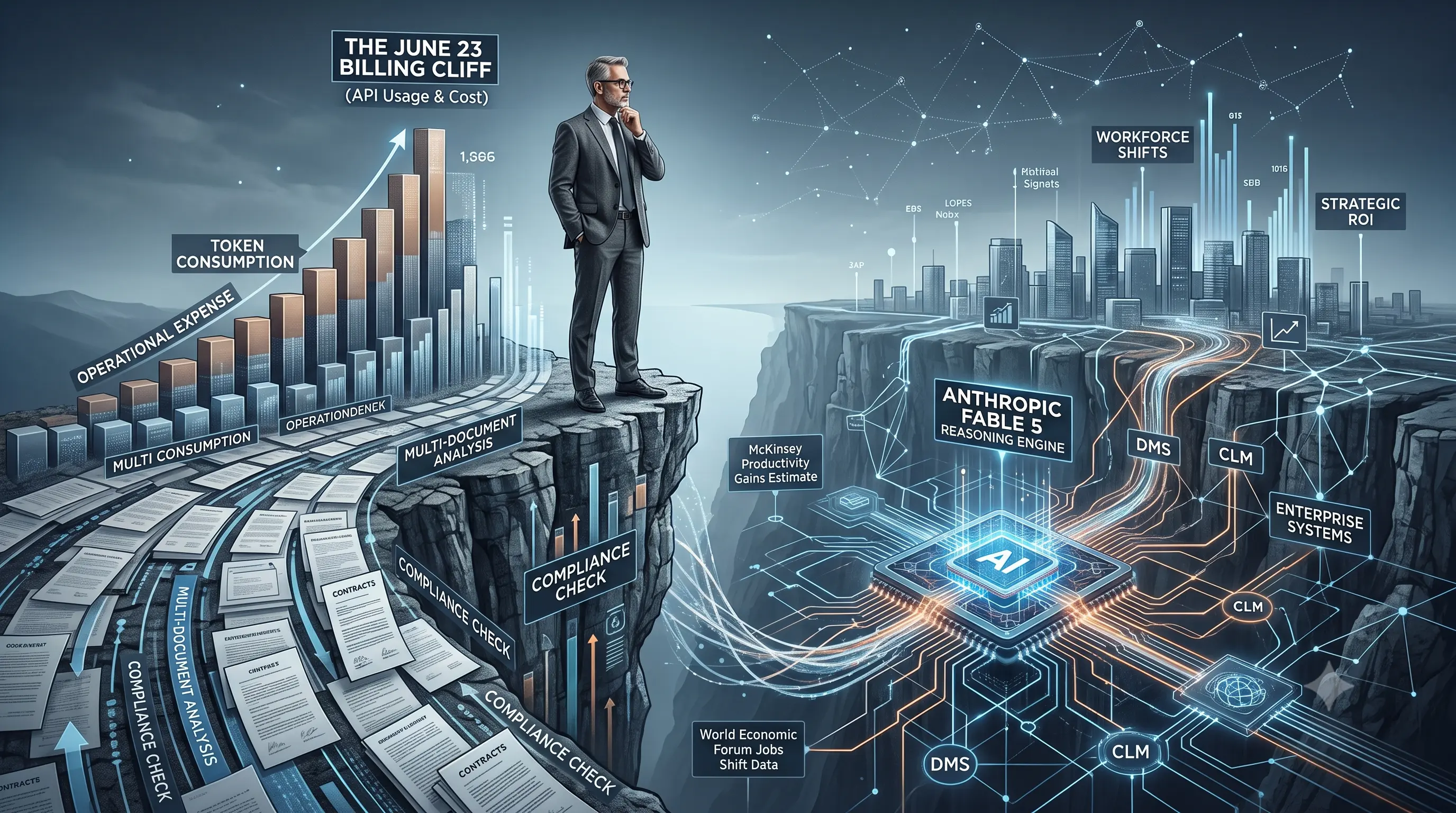
The economic stakes are massive. McKinsey estimates that generative AI could add $2.6 to $4.4 trillion annually across global corporate use cases. Furthermore, according to the World Economic Forum (2024 Future of Jobs Report), the automation of repetitive cognitive tasks by autonomous systems is accelerating faster than previous hardware-based automation cycles. Gartner also reports that enterprise AI budgets are increasingly shifting away from experimental sandbox projects directly into core operational workflows.
The Reality of Always-On Workflows
In real enterprise workflows, teams notice that the primary benefit of agentic AI is not just speed, but the decoupling of productivity from the human biological clock. A massive due diligence data room does not need to wait for a junior associate to clock in at 9:00 AM. It can be processed, analyzed, and categorized at 3:00 AM on a Sunday.
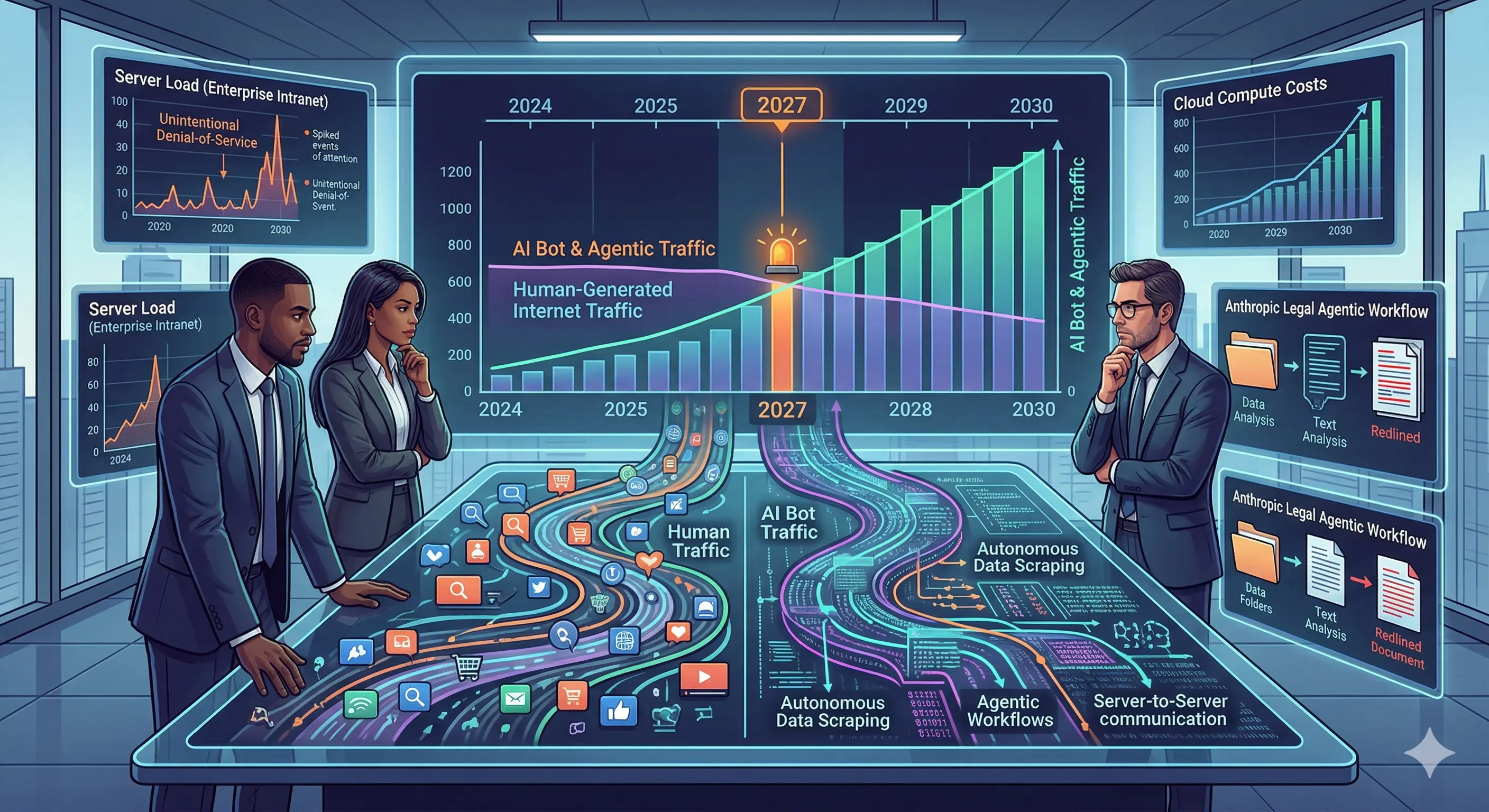
But this operational tempo changes team dynamics. One issue that keeps resurfacing is the bottleneck of human review. When an agentic system processes ten thousand contracts overnight, human managers arrive in the morning to an avalanche of flagged anomalies. The chokepoint simply moves from data processing to decision-making.
Deep Dive: Anthropic Legal AI as the Agentic Blueprint
To understand the mechanics of agentic 24/7 workflows, one must look at how large language models like Anthropic's Claude are being deployed in enterprise legal environments. Anthropic's architecture, particularly with its massive context windows, allows it to act as an autonomous legal analyst rather than a simple text predictor.
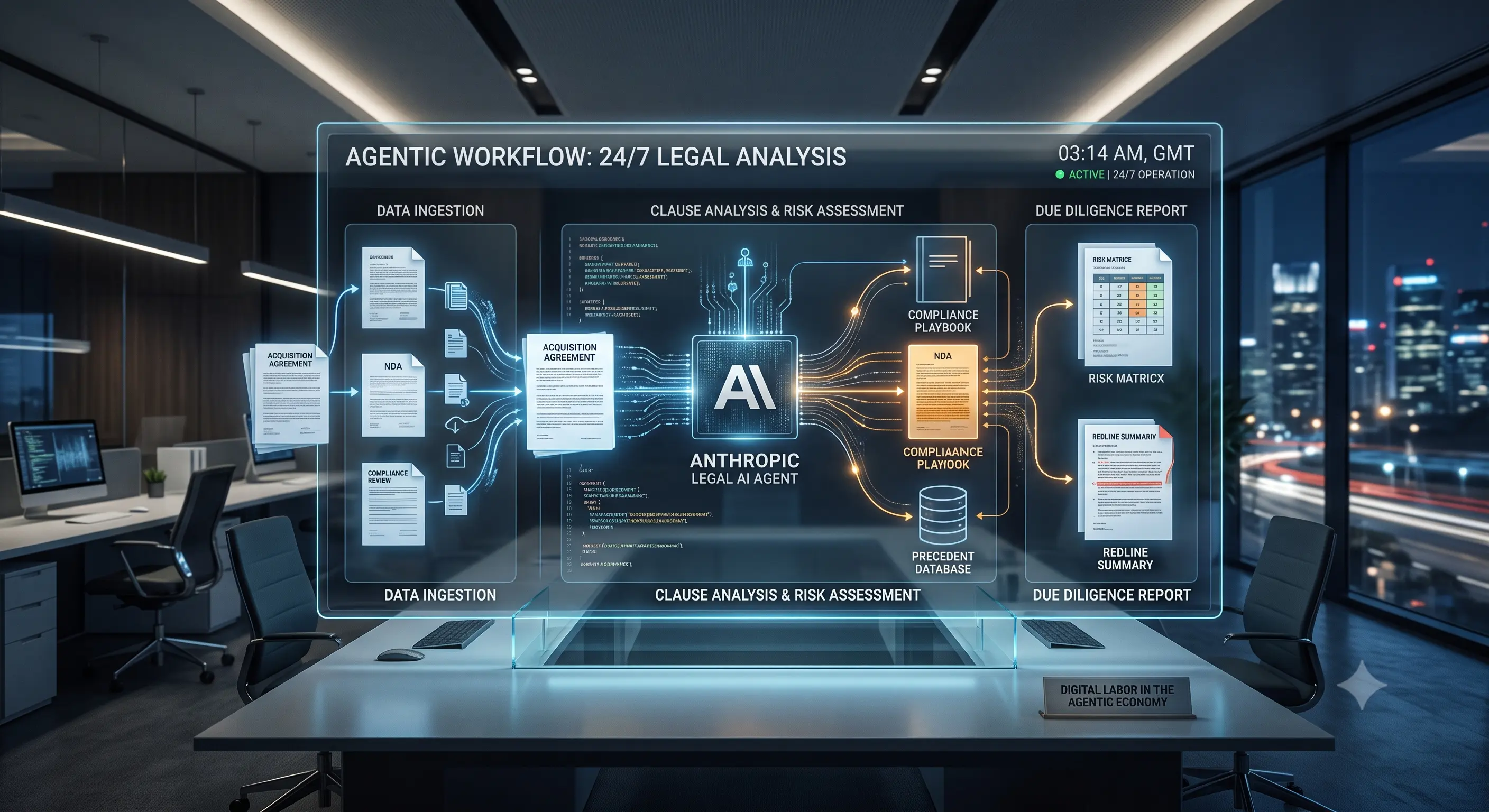
By leveraging its secure enterprise-grade API, legal tech platforms integrate Anthropic's models to read hundreds of pages of case law, corporate charters, and complex financial agreements simultaneously. It does not just summarize; it cross-references clauses against a company's internal compliance playbook, flagging risks and generating formatted reports without being prompted for every single step.
Step-by-Step: How the Agentic Legal Tool Works
- Step 1: Data Ingestion and Normalization. The system continuously monitors secure enterprise folders. When a new batch of contracts is uploaded, it automatically ingests the documents, converting various formats into machine-readable text.
- Step 2: Contextual Mapping. The AI maps the document text against the company's predefined legal parameters, identifying key entities, liabilities, and standard clauses.
- Step 3: Autonomous Reasoning. The agentic model cross-references anomalous clauses against external regulatory databases or past company precedents, determining the severity of the deviation.
- Step 4: Output Generation. It automatically drafts a risk summary, highlights problematic clauses, and suggests redline edits, placing a complete review package in the human attorney's inbox.
Real-World Enterprise Use Case: M&A Due Diligence
Consider a multinational merger involving three subsidiary companies. Historically, a team of twenty associates would spend three weeks in a data room reading lease agreements to find change-of-control clauses. Today, an enterprise using an agentic workflow powered by Anthropic routes all documents through the AI overnight. The system identifies all change-of-control clauses, categorizes them by risk level, and generates a spreadsheet linking directly to the source text. The human legal team spends their time negotiating the high-risk outliers rather than searching for them.
Traditional Workflows vs. Agentic Legal AI
| Feature | Traditional Legal AI (Copilots) | Agentic Legal AI (24/7 Autonomous) |
|---|---|---|
| Execution Style | Reactive. Requires constant human prompting. | Proactive. Executes multi-step logic loops autonomously. |
| Uptime | Active only when the human user is actively typing. | Continuous 24/7 background processing. |
| Document Handling | Analyzes single documents or short text snippets. | Processes vast corpuses and cross-references thousands of pages. |
| Output | Basic summaries or drafted paragraphs. | Comprehensive risk matrices and finalized audit reports. |
Where This Breaks Down in Real Use
This sounds efficient, but in practice, agentic systems hit significant friction points. The first is data governance. An autonomous agent is only as good as the internal data it accesses. If a company's legacy contracts are poorly organized or filled with contradictory amendments, the AI will confidently generate flawed risk reports based on bad data.
When leadership teams evaluate this, they often underestimate the cultural resistance. Senior partners and department heads are accustomed to trusting human associates whose reasoning they can interrogate. An AI agent, even one that provides citations, requires a massive shift in institutional trust. There is also the reality of budget misalignment; enterprises often budget for software licenses but fail to fund the extensive data-cleaning and system integration required to make agentic workflows function securely.
Who Should NOT Use This
Not every organization is ready for always-on agentic workflows. Small legal boutiques handling highly bespoke, emotionally nuanced litigation will find little value in autonomous contract analysis. Teams lacking strict data hygiene and secure, siloed cloud infrastructure should absolutely wait. Deploying agentic AI without an airtight governance framework is a recipe for compliance disasters. If your primary bottleneck is client relationship management rather than document processing, this technology will not solve your core problems.
Pros and Cons of Agentic Automation
- Pro: Exponential scaling of document review and cognitive labor.
- Pro: Significant reduction in fatigue-related errors during high-volume data analysis.
- Pro: Frees up senior talent to focus strictly on strategic negotiations and complex problem-solving.
- Con: High initial setup costs for data integration and security compliance.
- Con: Risk of compounding errors if the AI misinterprets a foundational company policy.
- Con: Substantial cultural friction and required retraining of mid-level management.
Economic and Board-Level Implications
At the board level, the conversation is shifting from IT spending to workforce strategy. Agentic AI is no longer viewed as software; it is viewed as digital labor. This fundamentally alters unit economics. When the marginal cost of reviewing a fifty-page contract drops to a few cents and happens instantly, the enterprise can afford to take on more complex transactions without linearly scaling headcount.
However, this requires a strategic realignment of human capital. Enterprises will need fewer data-gatherers and more AI-auditors—professionals skilled at managing, constraining, and verifying autonomous outputs. The long-term economic implication is a hyper-efficient corporate layer where speed-to-insight is the primary competitive advantage.
AI SEO Entities and Internal Linking Suggestions
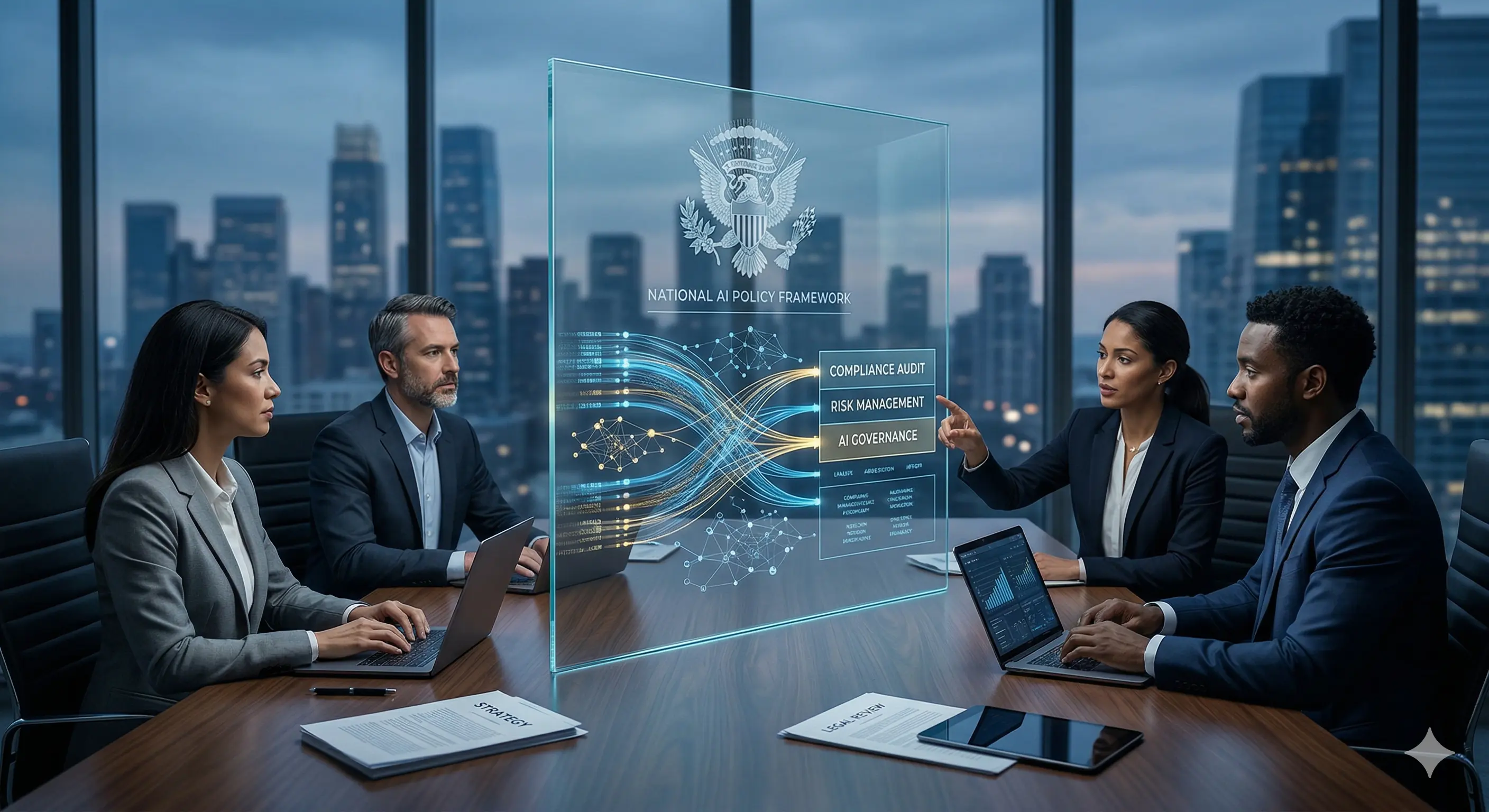
To maximize knowledge architecture, content strategists should consider internal linking opportunities. Anchor text suggestions include: enterprise AI governance frameworks, future of white-collar work, and AI-driven productivity shifts. External authority mentions, such as research from the Stanford Institute for Human-Centered Artificial Intelligence (HAI), further ground the operational realities of these systems.
Frequently Asked Questions (FAQs)
What makes an AI workflow agentic rather than just generative?
Agentic workflows can plan, execute multi-step tasks, and make localized decisions without a human prompting every single action. Generative AI simply creates text or images based on a direct, immediate command.
How does Anthropic's tool handle attorney-client privilege?
Enterprise deployments of models like Anthropic are typically done through secure, private API endpoints or virtual private clouds. The data is not used to train the base model, ensuring that proprietary and privileged information remains within the corporate perimeter.
Can agentic legal AI replace human lawyers?
No. Agentic systems replace the repetitive tasks of legal practice—such as document review, anomaly detection, and basic drafting. Human lawyers are required for strategy, negotiation, ethical judgment, and court representation.
What is the biggest risk of implementing 24/7 AI workflows?
The primary risk is runaway automation based on poor data. If an autonomous system applies a flawed legal interpretation to thousands of contracts overnight, the cost to unwind that error is massive. Human-in-the-loop verification remains essential for final approvals.
How long does it take an enterprise to implement this?
While API access is instant, integrating an agentic workflow into secure enterprise data lakes and adjusting company culture typically takes six to twelve months of structured change management.
Does this technology hallucinate like public chatbots?
Enterprise systems severely restrict hallucinations by grounding the AI in the company's specific data (Retrieval-Augmented Generation) and instructing the model to only answer based on the provided documents. However, edge-case misinterpretations can still occur.
The integration of autonomous systems into the corporate backbone is not a future possibility; it is a present operational mandate. As organizations move past the initial hype of generative text, the real differentiator will be how effectively leadership can restructure their workflows to support digital labor. Success requires more than just API access; it demands a critical rethinking of governance, trust, and how human talent interacts with systems that never sleep.
Disclaimer: This content is for informational and educational purposes only and does not constitute legal, financial, or formal enterprise consulting advice. Organizations should consult certified IT security and legal counsel before deploying autonomous AI systems within their operations.