The New White House National AI Policy Framework: What Enterprise AI Teams Need to Know in 2026
Published: June 2026
Reading Time: 10–12 minutes
Artificial Intelligence is rapidly moving from experimentation to enterprise-wide adoption. With governments introducing AI regulations and organizations deploying Large Language Models (LLMs) into production, engineering teams now face a new challenge: building AI systems that are not only intelligent but also secure, transparent, and compliant.
In this article, we'll explain what the White House National AI Policy Framework means for businesses, why enterprise AI deployment is more difficult than most vendors claim, and how organizations can build trustworthy AI systems without slowing innovation.
Introduction
When ChatGPT became popular, many organizations believed adding AI to their products would be straightforward—simply connect an API and let the model answer questions.
In reality, production AI systems are far more complex.
From my own experience working on backend automation systems, document processing pipelines, and production APIs, the AI model itself often represents only a small portion of the engineering effort. Most development time is spent handling authentication, data quality, monitoring, validation, retries, logging, and ensuring outputs remain reliable under real-world conditions.
That experience mirrors what many enterprise engineering teams are discovering today: the biggest challenge isn't deploying AI—it's governing it responsibly.
This is exactly why the White House National AI Policy Framework has become such an important milestone. Rather than slowing innovation, it encourages organizations to build AI systems that customers, regulators, and businesses can trust.
What is the White House National AI Policy Framework?
The White House National AI Policy Framework provides guidance for the responsible development and deployment of artificial intelligence across government agencies and encourages best practices throughout industry.
The framework focuses on reducing risk while supporting innovation through responsible AI governance.
Key Objectives
- Improve AI safety
- Increase transparency of advanced AI models
- Strengthen cybersecurity protections
- Encourage responsible model evaluation
- Promote human oversight for high-risk applications
- Support standards such as NIST AI Risk Management Framework
Why This Matters for Enterprise Organizations
Many companies are integrating AI into customer support, legal review, finance, healthcare, software development, and internal knowledge systems.
While these applications improve productivity, they also introduce new risks:
- Incorrect AI-generated information
- Exposure of confidential data
- Regulatory compliance failures
- Bias in automated decisions
- Lack of explainability
For engineering leaders, AI governance has become just as important as application performance.
The Reality of Deploying AI in Enterprise Systems
Marketing demonstrations often make enterprise AI look effortless. A chatbot answers perfectly, documents are summarized instantly, and workflows appear fully automated.
Production environments rarely behave this way.
During backend engineering projects, I've consistently found that most implementation work happens outside the AI model itself. Engineers spend significant effort building infrastructure that users never notice.
Typical Engineering Work Includes
- Cleaning inconsistent datasets
- Role-based authentication
- Prompt logging
- Monitoring model failures
- Rate limiting
- Retry mechanisms
- Source validation
- Human approval workflows
- Audit trails
Without these components, even highly capable AI models become unreliable in production.
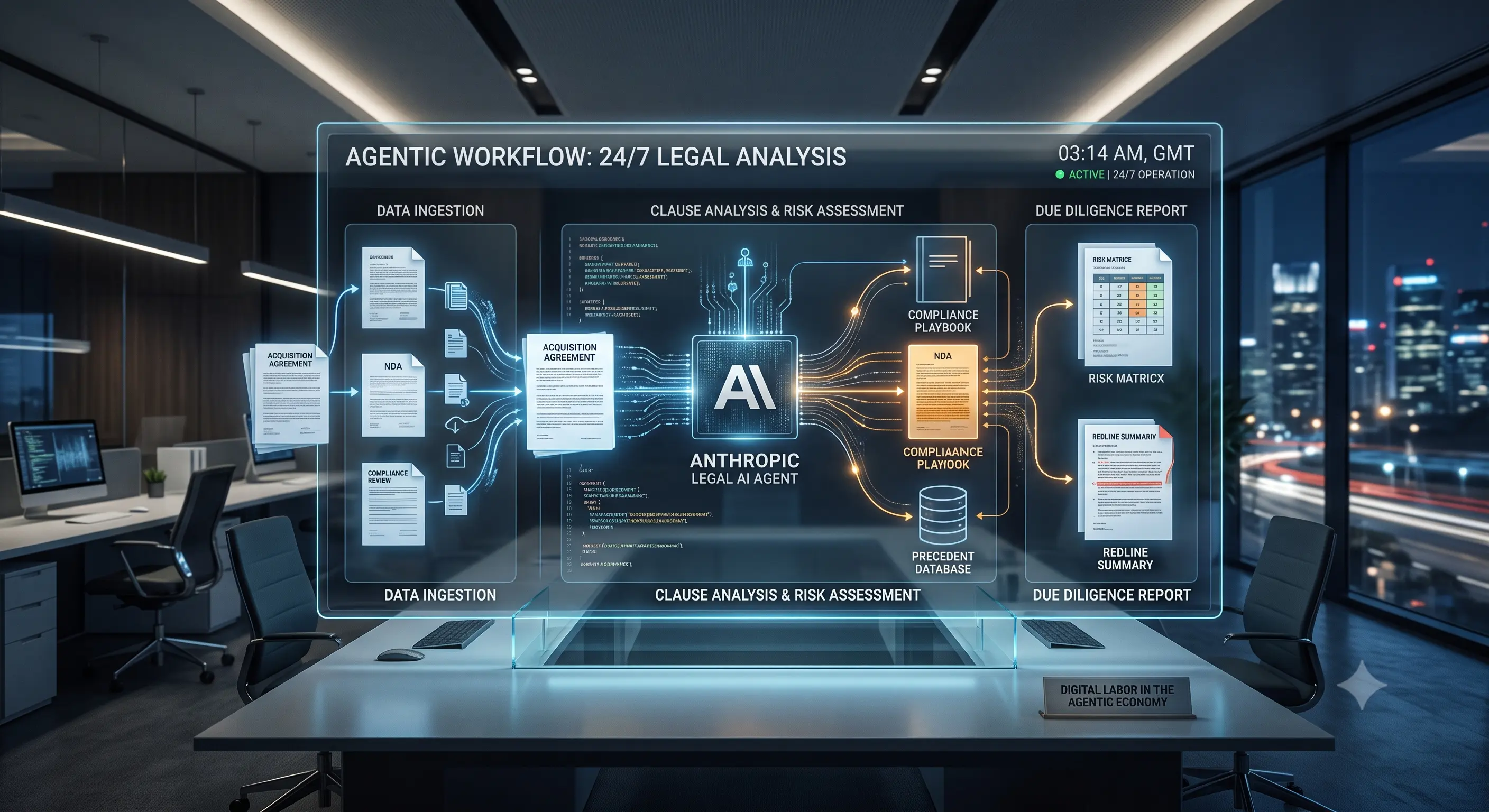
Case Study: AI-Assisted Legal Document Review
Legal teams often review thousands of contracts during mergers, acquisitions, or compliance audits. Traditional review processes require experienced lawyers to manually examine each document.
Modern AI systems can assist by identifying clauses, highlighting potential risks, grouping similar contracts, and generating summaries. However, these outputs should always be reviewed by qualified legal professionals before decisions are made.
Typical Enterprise Workflow
- Secure document upload
- Document indexing
- Embedding generation
- Semantic search
- Clause extraction
- Risk detection
- Citation generation
- Human legal review
The AI accelerates repetitive analysis while experienced professionals remain responsible for final decisions.
Enterprise AI Architecture
| Component | Purpose |
|---|---|
| Data Storage | Store documents securely |
| Vector Database | Semantic document retrieval |
| LLM | Answer user queries |
| Validation Layer | Check AI responses |
| Monitoring | Track failures and hallucinations |
| Audit Logs | Maintain compliance records |
Common Mistakes Organizations Make
1. Poor Data Quality
AI cannot compensate for inaccurate or outdated data. Garbage in almost always results in garbage out.
2. Ignoring Monitoring
Many teams monitor CPU usage and API latency but never measure hallucination rates or response quality.
3. No Human Review
Completely automating high-risk decisions introduces unnecessary business and legal risk.
4. Weak Security Controls
Sensitive business information should never be exposed to AI systems without proper access controls.
5. Cost Underestimation
API usage, embeddings, vector databases, infrastructure, storage, monitoring, and engineering maintenance all contribute to the total cost of ownership.
Best Practices for Enterprise AI Deployment
- Start with one well-defined workflow.
- Measure business impact before expanding.
- Maintain complete audit logs.
- Validate AI outputs before exposing them to customers.
- Keep humans involved in high-risk decisions.
- Monitor quality continuously.
- Review prompts and system behavior regularly.
- Build security into the architecture from day one.
Organizations that treat AI as part of their software engineering discipline—not as a standalone feature—are generally better positioned for long-term success.
The Future of Enterprise AI
Enterprise AI is entering a more mature phase. Success will increasingly depend on governance, reliability, security, and operational excellence rather than simply adopting the newest model.
Engineers who understand backend systems, cloud infrastructure, monitoring, retrieval pipelines, and AI governance will be well positioned as organizations continue scaling production AI.
The companies likely to benefit most from AI are not necessarily those deploying it first, but those deploying it responsibly.
Frequently Asked Questions
What is the purpose of the White House AI Framework?
It encourages safe, secure, transparent, and trustworthy AI development while supporting innovation.
Will AI replace legal professionals?
Current AI systems are designed to assist with repetitive analysis and research, but qualified professionals remain responsible for interpreting results and making legal decisions.
Why is enterprise AI implementation difficult?
Most complexity comes from data integration, governance, security, monitoring, compliance, and infrastructure rather than the AI model itself.
Should startups worry about AI governance?
Yes. Building governance practices early is generally easier than retrofitting them after systems grow.
Key Takeaways
- Enterprise AI requires much more than connecting an LLM API.
- Governance and compliance are becoming core engineering responsibilities.
- Human oversight remains essential for high-impact decisions.
- Reliable AI systems depend on monitoring, validation, and secure infrastructure.
- Responsible AI deployment is increasingly becoming a competitive advantage.