The Medical AI Scribe Privacy Backlash: Risks, Realities, and Enterprise Compliance
The healthcare industry is experiencing a profound workforce shift driven by ambient listening technology. Clinicians, drowning in electronic health record documentation, are rapidly turning to medical AI scribes to reclaim their time. Yet, beneath the promise of eradicated burnout lies a growing enterprise-level crisis: the medical AI scribe privacy backlash.
As adoption outpaces regulatory oversight, hospital networks, privacy commissioners, and boardrooms are discovering that not all ambient voice tools are built with enterprise-grade safeguards. Regulatory scrutiny is intensifying rapidly. And the integration of AI into the examination room is forcing a complete re-evaluation of patient consent, data residency, and clinical liability.
This topic must be treated as a serious economic and AI-adoption shift. It is not merely a debate over software features; it is a fundamental restructuring of how sensitive health data is captured, processed, and protected in the modern digital economy.
What is a Medical AI Scribe?
Definition: A medical AI scribe is an ambient listening application that uses natural language processing and generative AI to record, transcribe, and synthesize doctor-patient conversations into structured clinical notes within an Electronic Health Record system. Unlike basic dictation software, these systems actively interpret context, categorize symptoms, and draft medical documentation without requiring explicit voice commands.
The scale of implementation is striking. One large healthcare system recently reported over 7,000 physicians utilizing AI scribes in more than 2.5 million patient encounters over just 14 months. This rapid uptake is primarily driven by the promise of substantial efficiency gains across all healthcare disciplines.
The Economic and Workforce Reality of Ambient AI
The operational appeal of these tools is undeniable. According to the World Economic Forum (2024 Future of Jobs Report), healthcare faces a severe global staffing deficit. Reducing administrative overhead is a primary strategy for workforce retention and operational survival.
Early observational studies show that ambient AI scribes can reduce documentation time by a median of 2.6 minutes per appointment. They have also been shown to cut after-hours charting by nearly a third. These time savings offer a meaningful opportunity to improve clinician well-being and expand capacity for direct patient care.
McKinsey estimates that generative AI could add trillions annually to the global economy, with healthcare operations representing a massive share of that value. But rapid scaling brings immense friction. Deploying generative algorithms in high-stakes clinical environments introduces vulnerabilities that traditional IT compliance frameworks were never designed to handle.
Where This Breaks Down in Real Use
Despite the optimistic market projections, deploying generative AI in clinical environments is messy. The friction points are not just theoretical; they are manifesting daily in hospital operations. The technology often struggles to map the nuance of human suffering to structured data fields.
In real enterprise workflows, teams notice that ambient scribes often struggle with dynamic, chaotic clinical environments. Multiple people speaking in an exam room, heavy accents, and complex cultural idioms frequently lead to dropped context. The technology prioritizes conversational flow, which sometimes results in the omission of critical, nuanced details mentioned only briefly by the patient.
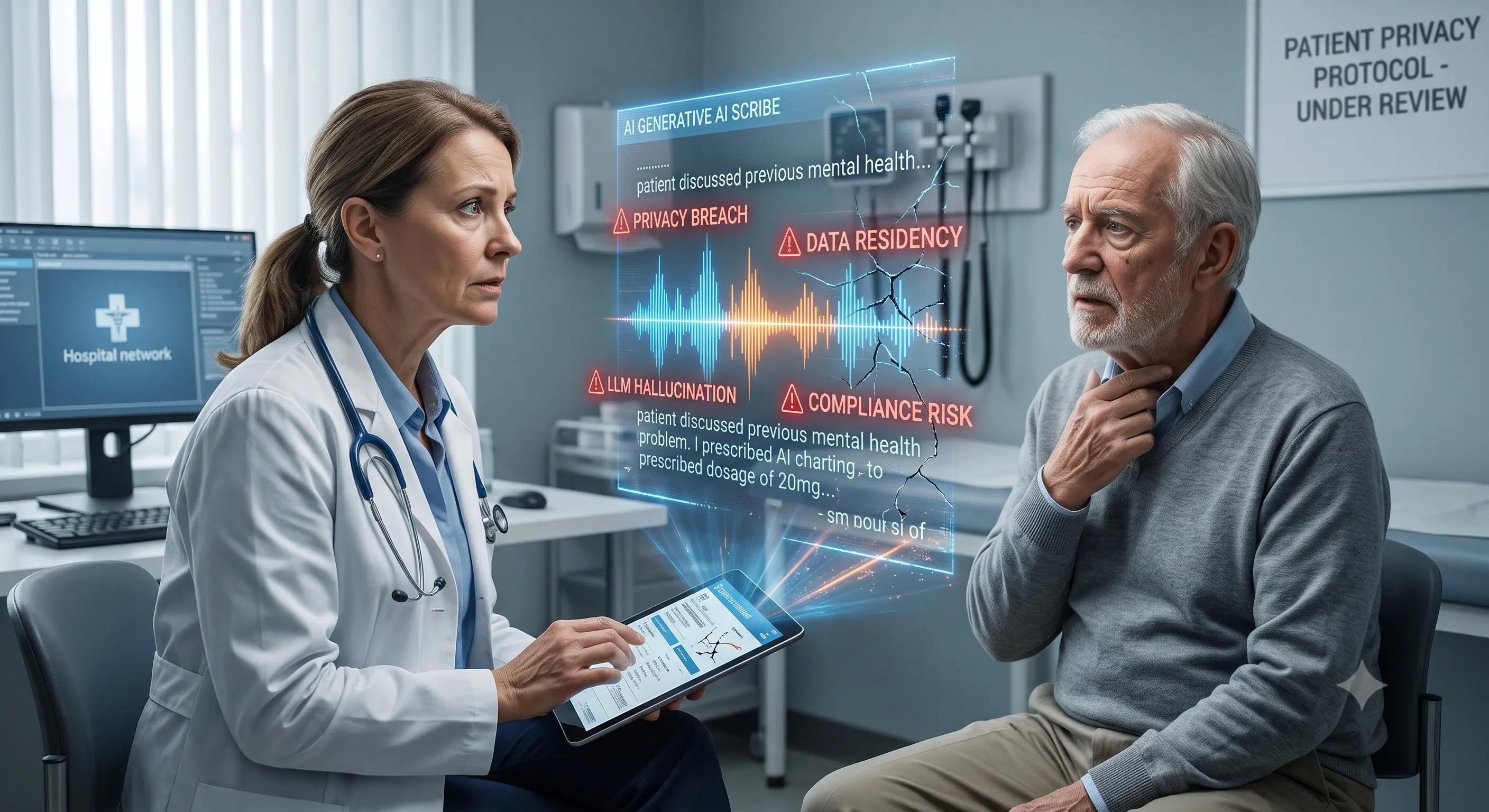
One issue that keeps resurfacing is the phenomenon of clinical hallucinations. AI models have a tendency to fill in the blanks. For example, if a physician performs a basic physical exam but does not verbalize every single step, the scribe might automatically document normal findings for systems that were never actually examined.
This sounds efficient, but in practice, it creates a dangerous liability gap. The medical record ends up reflecting a reality that never occurred, potentially compromising patient safety and clinical integrity. It shifts the burden of accuracy entirely back onto the exhausted physician, who must painstakingly proofread the AI output.
The Privacy and Compliance Backlash
The most significant barrier to scaling AI scribes safely is data privacy. Health regulators, such as the Office of the Information and Privacy Commissioner for British Columbia, have issued stark warnings about the lack of oversight and informed consent surrounding these tools.
When leadership teams evaluate this technology, they are often alarmed by the ambiguity of vendor data retention policies. While many startups claim HIPAA compliance, the underlying mechanics of how audio data is processed, stored, and utilized for future model training often remain opaque.
The backlash is rooted in the realization that de-identified patient data might still retain recognizable patterns. Furthermore, cross-border data processing may violate strict regional laws like Ontario's PHIPA or strict European GDPR mandates. Patients are increasingly uncomfortable with the idea that their most vulnerable moments are being processed by third-party cloud servers.
How Anthropic's Legal AI Tool is Shaping the Response
To combat these compliance risks, enterprise healthcare organizations are deploying specialized legal AI to audit and govern their medical AI vendors. Anthropic's Legal AI tool, integrated into platforms like Claude Cowork, has emerged as a critical mechanism for navigating this privacy backlash.
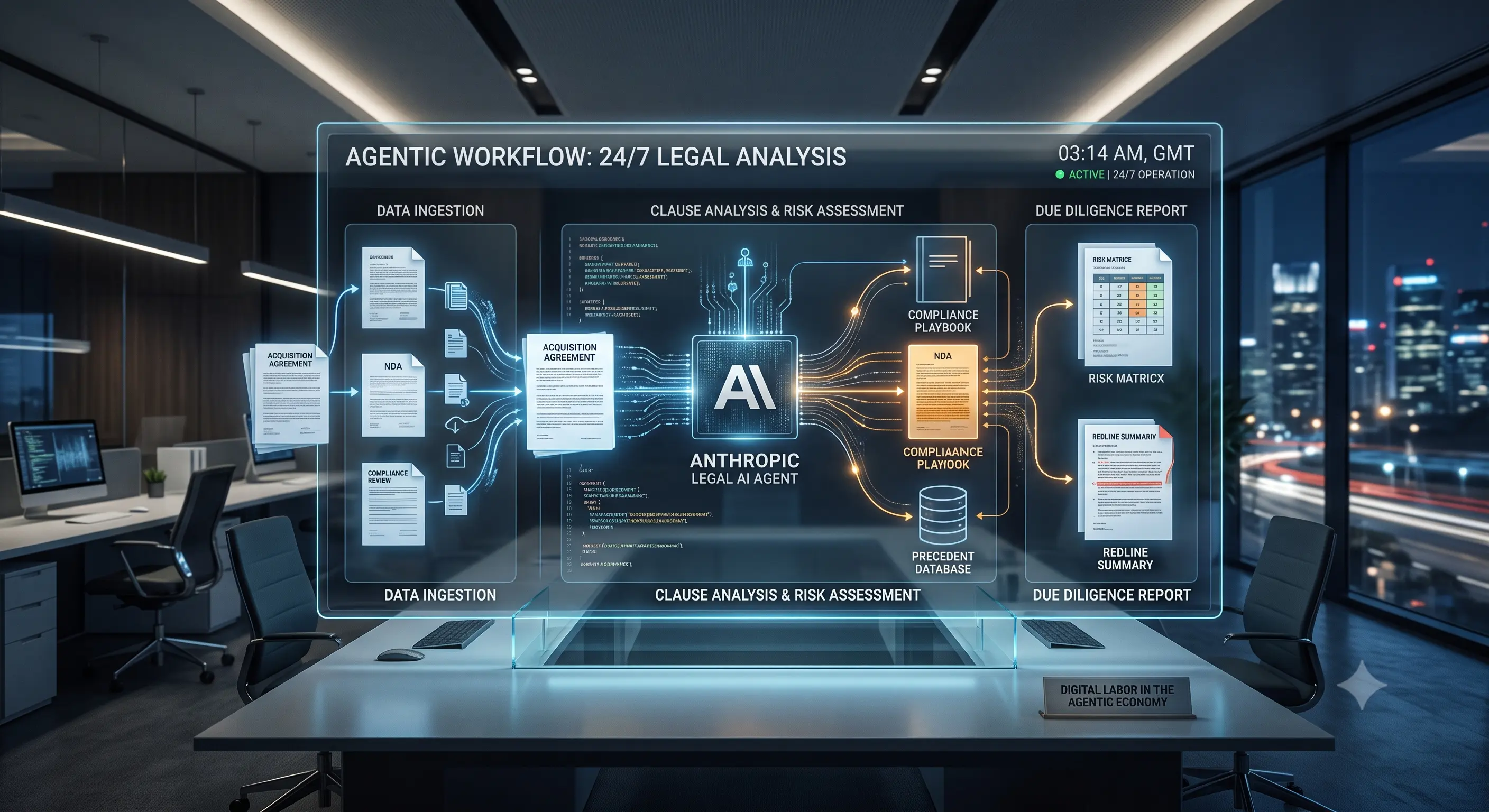
Anthropic's legal suite is a workflow-integrated AI designed to handle complex legal reasoning, contract analysis, and compliance mapping. Rather than just generating text, it connects directly to enterprise document management systems to analyze vendor agreements against specific jurisdictional risk profiles.
How It Works: Step-by-Step Vendor Auditing
- Step 1: Document Ingestion. The hospital's legal team feeds the AI Scribe vendor's Master Services Agreement and Business Associate Agreement into the system using Anthropic's open Model Context Protocol.
- Step 2: Automated Review. The Vendor Agreement Reviewer plugin scans the contracts against the hospital's internal privacy playbook, flagging deviations in data retention clauses or liability caps.
- Step 3: Privacy Triage. The Privacy Triager tool assesses the vendor's data processing activities to determine if a mandatory Privacy Impact Assessment is required by law.
- Step 4: Redlining and Escalation. Claude generates a redlined memo explicitly highlighting risks, such as inadequate SOC2 audit timelines or non-compliant cross-border data transfers, allowing human lawyers to negotiate safer terms.
Real-World Enterprise Use Case
A large regional health system recently used Anthropic's legal AI to evaluate a prospective AI scribe vendor. The tool rapidly identified that the vendor's standard agreement permitted the retention of anonymized audio snippets for ongoing algorithm training.
The AI flagged this as a high-risk violation of the health system's strict zero-retention policy. This early detection enabled the legal team to demand custom contract terms before deployment, thereby averting a massive patient privacy exposure and potential regulatory fines.
Traditional Workflows vs. Existing Legal AI Tools
Evaluating new AI vendors using traditional legal workflows is notoriously slow. It requires human associates to manually cross-reference lengthy business agreements against constantly evolving state and federal privacy laws. This bottleneck slows down the adoption of helpful clinical tools.
Generic conversational AI tools attempt to speed this up, but they lack workflow integration. Pasting a contract into a generic chatbot exposes sensitive hospital data to public models and strips away the surrounding context of the firm's specific risk tolerance.
Anthropic's approach differs fundamentally. It is built directly into the secure enterprise environment. It does not just summarize text; it routes drafts for review, tracks upcoming compliance deadlines, and associates specific risks with the correct internal stakeholder. This is why major law firms and in-house legal departments trust it over off-the-shelf alternatives.
Pros and Cons of Enterprise Legal AI
- Pro: Meaningful reductions in first-pass review time, often estimated at 40 to 50 percent for routine agreements.
- Pro: Computes compliance across multiple jurisdictions automatically, reducing fatigue-induced human error.
- Pro: Operates entirely within secure, sandboxed environments with zero data retention for training on enterprise tiers.
- Con: Requires significant upfront investment to calibrate the AI to the organization's specific legal playbook.
- Con: May generate authoritative-sounding hallucinations if the input data is poorly structured or contradictory.
Limitations, Risks, and Cultural Resistance
No matter how capable the tool appears, several limits must be accepted before widespread deployment. Legal AI is not a substitute for human legal judgment. Errors and hallucinations remain a persistent threat. In litigation or strict compliance auditing, an authoritative-sounding hallucination is infinitely worse than no answer at all.
Cultural resistance is also a major barrier. Veteran legal teams often push back against delegating risk analysis to a machine. There is a deep-seated fear of over-automation, where junior lawyers miss out on the foundational learning required to parse complex contracts because an AI is doing the heavy lifting.
Budget misalignment is another common friction point. Hospital boards may approve the budget for the medical AI scribes themselves but balk at the cost of licensing the legal AI needed to properly govern the implementation. This leaves the organization exposed to the very privacy backlash they are trying to avoid.
Comparison: Traditional vs. AI Legal Review
| Feature | Traditional Legal Workflow | Anthropic AI Legal Tool |
|---|---|---|
| Speed of Review | Takes days to manually cross-reference agreements against privacy laws. | Executes tabular diligence review in minutes with cited sources. |
| Risk Identification | Relies on the individual associate's memory of state-by-state laws. | Automatically computes compliance across multiple jurisdictions. |
| Cost Efficiency | High billable hours for routine contract triage and compliance checks. | Reduces first-pass review time significantly for standard agreements. |
| Accuracy and Oversight | Prone to fatigue-induced errors during high-volume document review. | Provides comprehensive checklists, but requires final human judgment. |
Who Should NOT Use This
While ambient scribing is transformative, it is not a universal solution. Certain environments should avoid deployment until the technology matures significantly.
Organizations handling highly sensitive psychiatric evaluations or trauma counseling should wait. The nuances of these interactions are easily misinterpreted by algorithms, and patient trust is too fragile to risk audio recording. Similarly, small clinics lacking dedicated IT compliance officers to manually audit the accuracy of AI-generated notes should avoid these tools.
If your team does not have the budget to implement structured enterprise AI governance frameworks or perform rigorous post-encounter chart reviews, the liability risks currently outweigh the time savings. Do not deploy these systems if you cannot govern them.
The Board-Level Strategic Outlook
The medical AI scribe privacy backlash is not a rejection of artificial intelligence; it is a demand for maturity. As noted by researchers at Stanford HAI, the integration of AI into clinical practice requires a careful balance between rapid innovation and rigorous empirical validation. Healthcare boards must look beyond the immediate appeal of AI-driven productivity shifts and invest heavily in risk management architecture.
The vendors that survive this backlash will be those that offer transparent, zero-retention data policies and verifiable SOC2 compliance. Organizations must demand comprehensive physical, network, and process security measures verified through independent third-party audits.
Meanwhile, the deployment of secondary AI systems—like Anthropic's legal tools—will become standard practice to police and manage the future of white-collar work in healthcare. You cannot fight an AI-driven data explosion with manual compliance checks. The future requires AI to govern AI.
Frequently Asked Questions
Are AI medical scribes HIPAA compliant?
Many AI scribes are HIPAA compliant, meaning they encrypt data in transit and at rest. However, compliance also requires signing a strict Business Associate Agreement and ensuring the vendor has a zero-retention policy for raw audio.
Can patients refuse the use of an AI scribe?
Yes. Informed consent is a critical ethical and legal requirement. Patients must be informed that an ambient listening tool is in use and have the absolute right to opt out without facing a reduction in their quality of care.
What happens if an AI scribe makes a clinical error?
The ultimate liability rests with the attending physician. AI scribes are documentation assistants, not autonomous medical devices. Clinicians must review, edit, and sign off on all notes before they are finalized in the electronic health record.
Do AI scribes record audio permanently?
Enterprise-grade AI scribes should never store audio permanently. The audio should be processed in real-time or temporarily stored for transcription, then immediately deleted once the structured text note is generated to maintain compliance.
How is legal AI being used to manage these tools?
Health networks are using tools like Anthropic's Claude to audit vendor contracts, ensure regulatory alignment, and automate the creation of Privacy Impact Assessments before allowing AI